Always curious about what comes next.
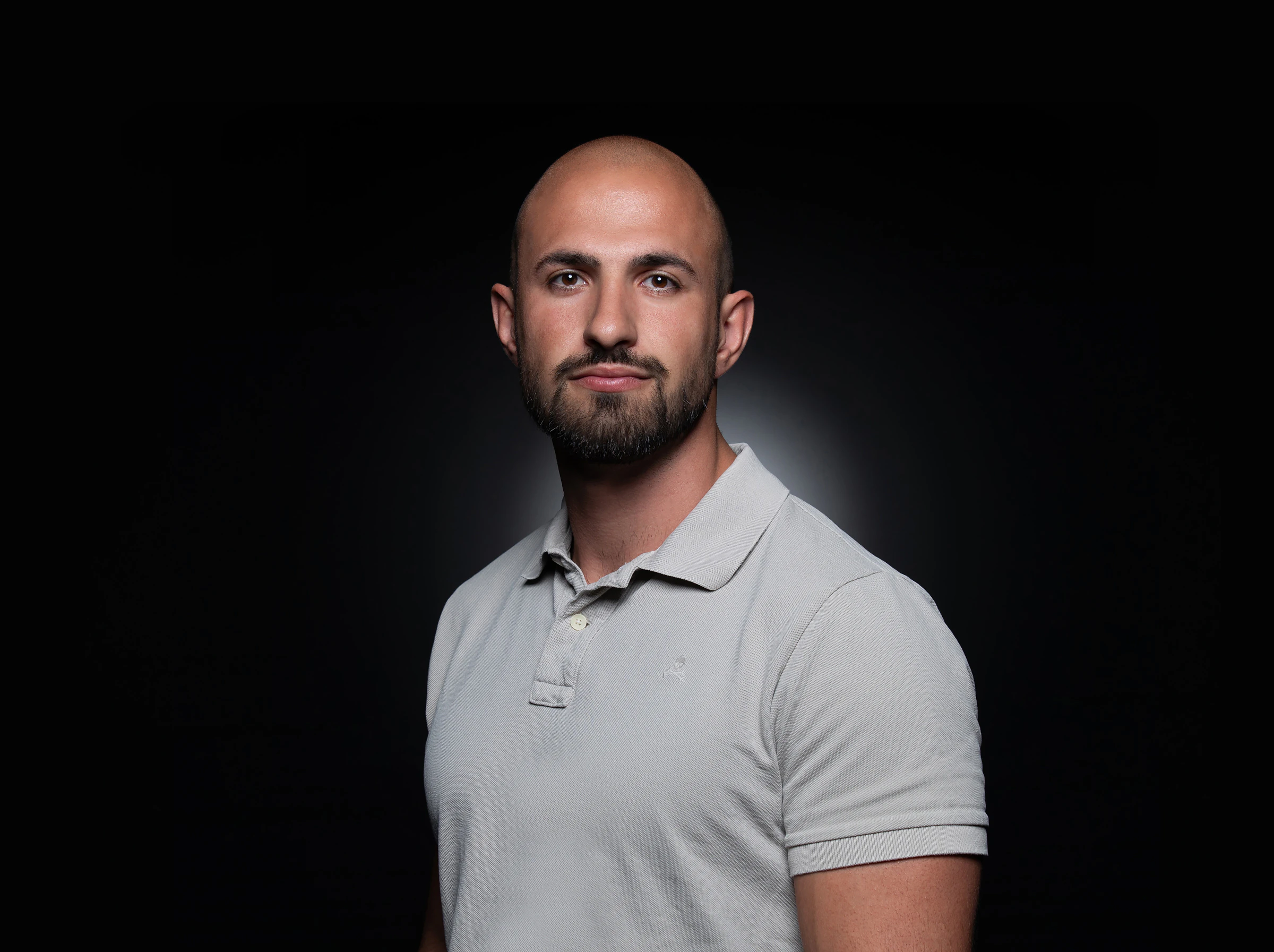
From high-end visual effects to developing generative AI capabilities at Framestore, my career has been driven by a curiosity about how images are made — and how technology can change what's possible. Beyond production, I teach, develop tools, speak at industry events and explore new ways of sharing knowledge with artists.
The routehere wasn'tparticularlydirect.
I grew up around art. My father worked across graphic design, sculpture and, for a time, traditional animation, so making images never felt like something distant or abstract. I started experimenting with Photoshop as a kid and taught myself After Effects around the age of twelve, mostly by trying to recreate things I'd seen in films.
My path wasn't particularly straightforward. I studied engineering and business, worked in advertising, and eventually found my way back to what had always interested me most: making images. Those years gave me something I still rely on today — a foundation in programming, mathematics, visual communication and an instinct to understand how things work beneath the surface.
Formal training in digital compositing eventually took me into high-end VFX, working across international studios on major film and television productions. As the projects grew more complex, so did my responsibilities. What started as solving problems within individual shots gradually became about helping teams solve them across entire productions.
Today, I'm a Visual Development Supervisor at Framestore, where I've helped build and grow generative AI capabilities within the VisDev team. My work has evolved from finishing shots to supervising artists and helping shape visual approaches before production begins. Emerging technologies have opened up entirely new possibilities, but the fundamental challenge hasn't changed: understanding what makes an image work, and finding ways to make it work consistently in production.
Alongside studio work, I teach digital compositing and artificial intelligence at universities and specialist schools, deliver training and workshops for companies and production teams, and speak at industry conferences and events. Teaching has become an important part of my career, giving me the opportunity to share both the technical knowledge and the creative judgement that come from working in production.
I'm also gradually building an independent academy around the kind of education I believe in: specialised, in-depth training for artists who want to go beyond techniques and develop a deeper understanding of their craft. My courses, free Nuke tools, technical articles and educational resources are all part of that work.
Whether it's a production workflow, a new tool, a course or a conference talk, the motivation is much the same: understanding difficult problems well enough to make that knowledge useful to someone else.
A few places the work has travelled beyond the studio.
Interviews, features and appearances around visual effects, technology, education and the path behind the work.
Talks
Press & interviews
- 2024
U-tad
Video
Efectos visuales: de estudiar en U-tad a viajar a Pandora
Watch - 2024
El Podcast del 3D
Podcast
#35 · Trabajar en lo MÁS TOP de los VFX
Listen - 2023
U-tad
Article
La inteligencia artificial en los efectos visuales
Read - 2022
laSexta
TV
Aitor Echeveste, uno de los 'arquitectos' de 'Avatar 2': "En la vida se había hecho algo tan grande"
Watch - 2022
Diario de Burgos
Newspaper
Aitor Echeveste, la firma burgalesa de 'Avatar: el sentido del agua'
Read - 2022
U-tad
Interview
Entrevista al compositor digital Aitor Echeveste
Read - 2022
Diario de Burgos
Newspaper
Los otros héroes de Marvel
Read - 2022
U-tad
Interview
Aitor Echeveste: de U-tad a trabajar con Marvel en películas nominadas a los Óscar
Read
I'm still interested in the same question.
Why does one image feel right, another feel artificial, and what can we learn by taking the difference seriously?